Protect the home
Keep appropriate insurance and essential utilities in place, secure the property and arrange routine checks and maintenance.
 Real EstateProbate Help
Get the free guide
Real estate probate help
A welcoming place for executors, administrators, heirs and family members to understand the real estate side of an inherited property in Georgia, South Carolina or Tennessee.
Real estate guidance in Georgia, South Carolina and Tennessee
A calm place to begin
When an estate includes a home, practical responsibilities can arrive before the family feels ready. Keisha Richards helps you understand the property, compare realistic options and prepare for a thoughtful conversation with the estate’s legal and tax professionals.
Property basics
Whether a home passes through probate depends on how it is titled and the estate’s circumstances. When probate applies, a transfer, distribution or sale must follow the applicable estate and title requirements. In the meantime, the property may need to be secured, insured, maintained, valued and included in the estate’s records.
Keep appropriate insurance and essential utilities in place, secure the property and arrange routine checks and maintenance.
Gather the deed, mortgage, tax, HOA, insurance and repair records, and document the home’s current condition.
The home may need an appraisal, court notices, creditor steps or approvals before a transfer or sale can be completed.
Plan for the holding period
Even an unoccupied home may create monthly expenses. A simple holding-cost estimate can help the estate compare timing and selling options.
Loan payments, home-equity obligations and other recorded claims.
Current taxes, assessments and potential exemptions or changes.
Estate, vacant-home or other coverage appropriate for the situation.
Electricity, water, gas, internet, security and climate protection.
Lawn care, cleaning, pest control, repairs and periodic inspections.
Association dues, cleanout, storage, staging and market preparation.
Understand practical property considerations while working with the appropriate probate court and estate professionals.
Georgia assistance →Get real estate support when an estate includes a South Carolina home, land or other residential property.
South Carolina assistance →Review property-related options for Tennessee executors, administrators, heirs and families.
Tennessee assistance →Practical next steps
Every estate is different, but these are common property-related steps families may need to consider.
Determine who has been legally authorized to act for the estate before signing agreements or making property decisions.
Address security, insurance, utilities, maintenance and urgent repairs while the estate is administered.
Review needed repairs, personal property, market condition and possible preparation costs.
Consider an as-is sale, limited preparation or a traditional listing based on the estate’s needs.
Your attorney, tax professional and real estate agent serve different roles throughout the process.
Confirm required signatures, estate documents, title information and closing instructions.
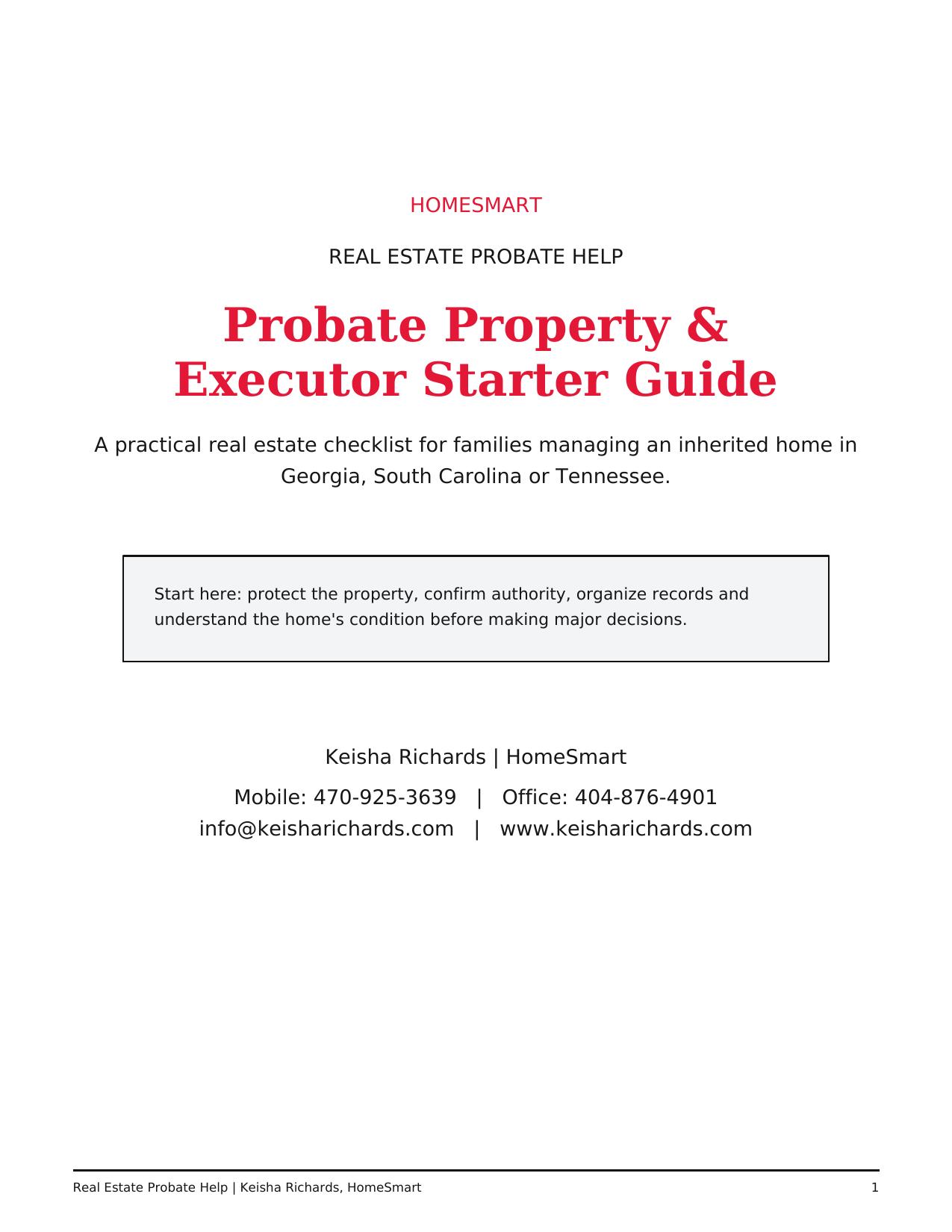
A resource you can use
The guide is designed to make the real estate side of an inherited home easier to organize. It gives you a practical reference to use while speaking with the estate’s attorney, tax professional and real estate advisor.
Frequently asked questions
There is no single timeline. Court schedules, required notices, creditor matters, title concerns, tax issues and disagreements may affect how long an estate takes. A property sale may follow a different schedule from the overall estate administration. Ask the estate attorney for an estimate based on the state and circumstances.
Often, yes—but the timing, authority and approvals depend on the will, title, court appointment, state law and the estate’s circumstances. Confirm legal authority before signing listing or sale documents.
Pause major decisions and involve the estate attorney. The personal representative’s duties, ownership interests, the will and court process may affect what can happen next. A neutral market analysis can help the family understand the real estate facts, but it does not replace legal advice.
An as-is sale may be possible once the person with authority is confirmed. The estate should compare likely price, preparation costs, disclosure obligations, timing and buyer demand before choosing a strategy.
Mortgage payments, insurance, taxes, utilities, maintenance and HOA charges may continue during administration. How those expenses are handled depends on the estate and governing documents; review them promptly with the appropriate attorney, tax professional and financial institutions.
.jpeg)
Your real estate resource
Keisha Richards is a HomeSmart real estate professional serving families across Georgia, South Carolina and Tennessee. She understands that an inherited home can carry financial responsibilities, family history and difficult decisions at the same time.
Keisha helps executors, administrators, heirs and families evaluate property condition, understand current market considerations, compare preparation and selling strategies, and coordinate the real estate steps with the estate’s other professionals—without pressure.
Keisha Richards · HomeSmart
Mobile 470-925-3639 · Office 404-876-4901
info@keisharichards.com
Private conversation
Share what is happening with the property. Your initial conversation is focused on understanding the situation, answering real estate questions and identifying practical next steps.
Take the next step
Receive the Probate Property & Executor Guide by email and keep practical property steps, questions and resources close at hand.
Five practical pages